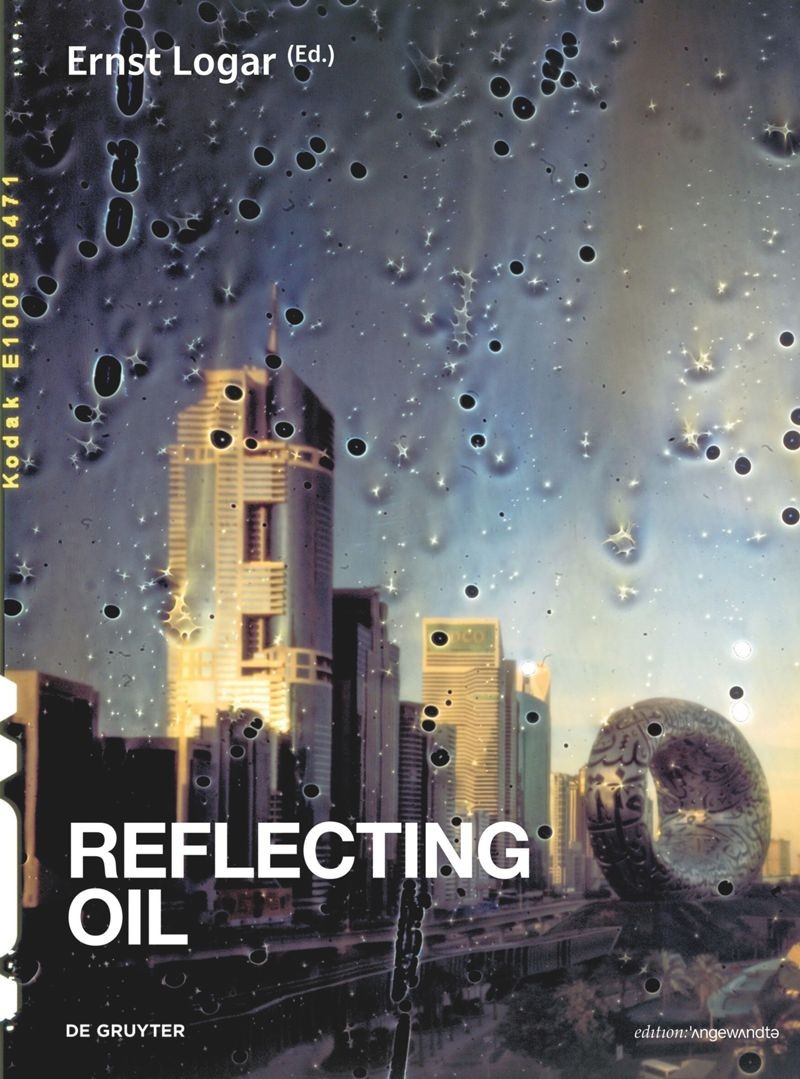
Reflecting Oil presents innovative reflections
on crude oil, one of the most important fossil fuels characterising modern life: On the one hand, oil functions as a fuel
for unrestricted mobility and on the other, as a basis for shaping the material world, thus laying the foundation for a ubiquitous
petroculture.
Yet despite these profound repercussions on our existence, crude oil is a substance we rarely encounter
directly with our senses. This lack of contact is logical in view of its specific properties (unusual odor, toxicity, etc.),
but the question arises as to why this connection is not explicitly sought after in the sciences.
Reflecting Oil is
the result of different artistic research processes which entailed practical handling and holistic observation of the raw
substance in the context of petroculture. This mode of research focusing on sensory perception—such as the differentiation
of colors and smells, etc., and aesthetic and symbolic interpretation—provided findings on the levels of multi-sensory and
practical knowledge.
Drawing on a collaboration between art and science, such interdisciplinary investigations into
crude oil as the basis of our petromodernity can be vital for the necessary shift towards sustainable energy cultures. A more
comprehensive understanding and awareness of how oil and fossil fuels shape our lives can stimulate the necessary cultural,
social, and technological transformations towards a sustainable future.
Ernst Logar, Department
of Site-Specific Art, University of Applied Arts Vienna
BOOK PRESENTATION
Tuesday, June 3, 2025 – 5 p.m.
AIL – Angewandte Interdisciplinary Lab
Otto Wagner-Postsparkasse
Georg-Coch-Platz 2
1010 Vienna
Artist talk
Ernst Logar, editor, research project lead and artist,
University of Applied Arts Vienna,
and
Alexander Damianisch, Head of Support Art and Research, University of Applied
Arts Vienna
An event by the Department of Publications in cooperation with the editor and AIL – Angewandte Interdisciplinary Lab
Reflecting Oil
Ernst Logar (ed.)
De Gruyter, Edition Angewandte, 2025
ISBN: 978-3-68924-253-4
e-ISBN:
978-3-68924-046-2
To
the book