Verkleidete Distanzen: migratory aesthetics and counter-public spheres in the gdr
The exhibition, curated by Elisa R. Linn, explores the impact
of borders on the formation of counter-publics at the intersection of art, literature, and activism in the GDR during and
after the fall of the Berlin Wall.
It features artistic works, lyrical texts,
archival materials, and “a library from below.” It asks how artists developed a mode of “border thinking” (Gloria Anzaldúa/Walter
Mignolo)—a way of thinking about and across the border between ideologies, languages, identities, and normative understandings
of the body, sexuality, and civic belonging. How did this way of thinking enable them to resist the architectures of state
representation and subjectification, as well as the “scissors in their heads,” that is, inner self-censorship?
The contributions
to this exhibition make borders visible—whether physical, ideological, bodily, cultural, or media-based—and transcend and
occupy them as diasporic sites of articulation. These aesthetic strategies unfold in public, semi-public, or intimate spaces,
sometimes subverting official iconographies of identity—such as socialist realism’s vision of the “new man” promoted by the
GDR state. Others search for the liberating word in lyrical and narrative texts, where ambiguity becomes a tool for metamorphosis
and “becoming-minor” as generative strategies of resistance against discursive silencing. Some artists use autonomous, often
illicit, approaches to new media—creating “intermediate transgressions” through short film experiments that occupy legal gray
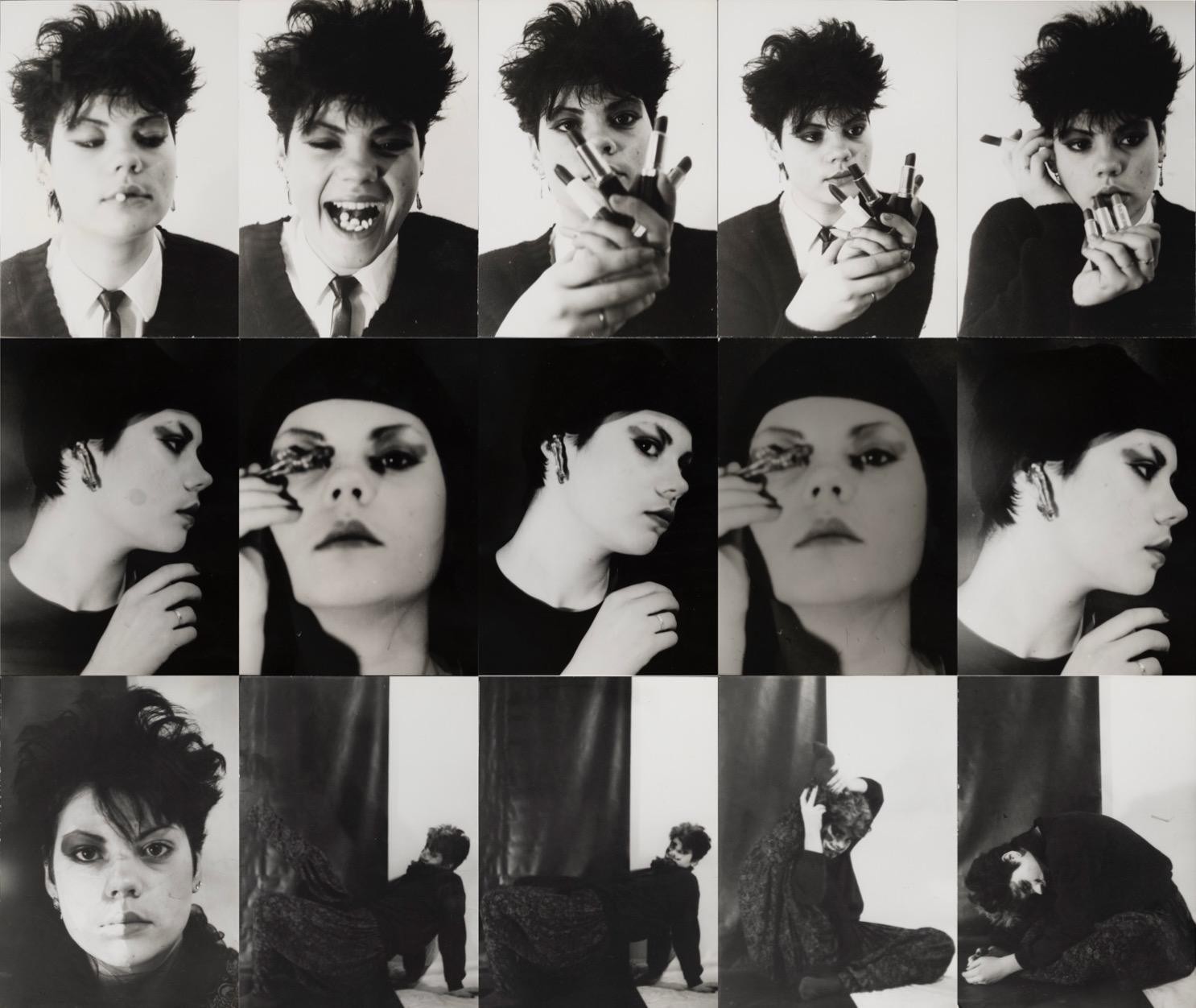
zones. Others pursue performative, actionist, and photographic explorations of the body as a political space. Still others
confront colonialist, de-subjectifying ascriptions of otherness with artistic obstinacy and subjective expression—beyond their
official daily routine as contract workers in a so-called “brother country.”
The contributions gathered in the
exhibition navigate between precisely this autonomy and confinement in condensed space, between repulsion and (sexual) desire,
and between community and experiences of isolation and exile. In doing so, they encourage us to understand the transcendence
and migration from one place, one identity, or one gender to another, not only as a state of emergency, a moment of alienation,
or a potential threat. Instead, they encourage us to invalidate boundaries, to reappropriate them, to locate them in favor
of their liminality, and to go beyond territorial and categorical ways of thinking.
Far from attempting to provide a
linear, comprehensive overview, the exhibition explores the aesthetic potential of these contributions from the subjective
perspective of a post-reunification generation: as nonconformist practices that devised alternative artistic forms of life,
action, and democratic community, thereby sometimes questioning conformity to the norms and property relations of West Germany's
patriarchal capitalist society. What potential do these practices hold today, at a time when nativism and isolationism are
increasingly underpinning the realpolitik of a supposedly “strong,” united Germany?
Curated by Elisa R. Linn.
With contributions by Jürgen Wittdorf, Clara Mosch, Núria Quevedo, Mahmoud Dabdoub, Gabriele Stötzer, Raja Lubinetzki,
materials from the GrauZone archive, Bärbel Bohley, Ulrich Polster, Annemirl Bauer invited by Sandra Teitge, César Olhagaray,
Ronald M. Schernikau, Marina Gržinić & Aina Šmid, Künstlerinnengruppe Erfurt, Geraldo Paunde, De-Zentralbild, Lutz Dammbeck,
frau anders, Jayne-Ann Igel, Jürgen Baldiga, Ladies Neid, Namenlos, Sarah Schulman.
The exhibition architecture is designed
by Lennart Wolff.